A practical guide to sizing a HEPA dust extractor for concrete grinding, covering CFM needs, filter ratings and hose sizing.
Concrete dust gets everywhere if you're not running the right vacuum on your grinder. Contractors in Des Moines, Ankeny and across the Midwest are learning fast that a shop vac won't cut it for silica dust control. A HEPA dust extractor sized correctly for your grinder keeps the job site clean, keeps you closer to OSHA's silica rule, and keeps grinding dust out of your lungs and off your customer's cabinets. This guide walks through CFM sizing, filter ratings, hose diameter and the differences between single-motor and three-phase machines, so you buy the right extractor the first time instead of the second one.
Why a Shop Vac Won't Handle Concrete Grinding
Grinding concrete throws off crystalline silica dust, and a lot of it is smaller than 10 microns. That fine fraction is the part that gets deep into your lungs. A household shop vac filter is built to stop sawdust and debris, not particles that small. Run one on a grinder for an hour and you'll see a haze in the air even though the vacuum sounds like it's working fine.
There's also a mechanical problem. Fine concrete dust is abrasive and it's heavy compared to sawdust. Standard shop vac motors overheat fast when they're pulling that kind of load all day. Filters clog within minutes, suction drops, and now your grinder shroud isn't sealing against the floor anymore. Dust escapes around the edges and you're back to square one.
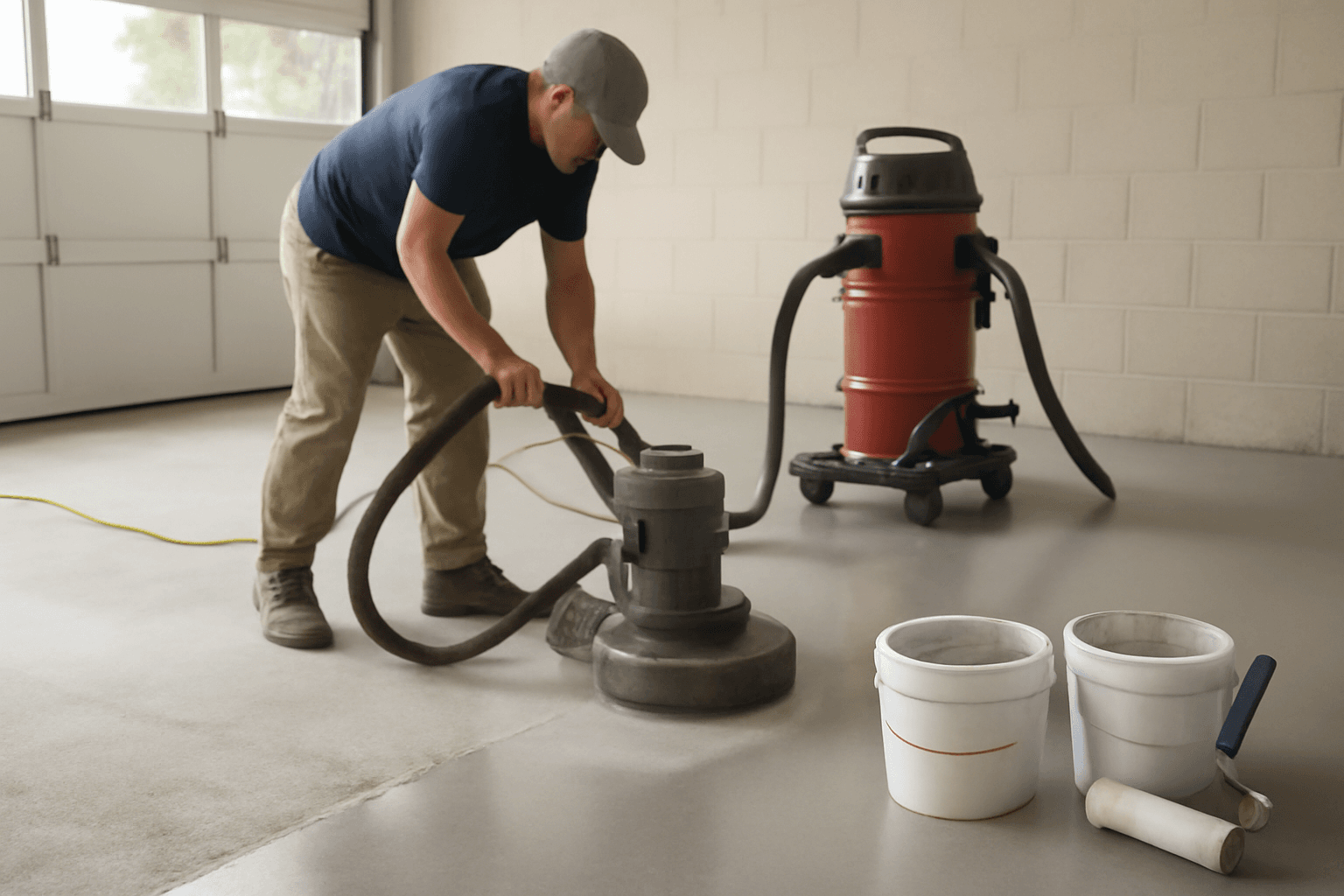
A true HEPA dust extractor is built different from the motor up. Bigger fan, sealed housing, filter media rated to actually stop the small stuff, and a design meant to run for hours without losing suction. If you're grinding concrete for a living, or even just prepping one garage floor for epoxy, this is not the place to cut corners.
Matching CFM to Your Grinder
CFM, cubic feet per minute, is the number that actually matters. It tells you how much air the extractor can move, which determines whether it can keep up with the dust your grinder is producing. Every grinder head size needs a minimum CFM to maintain negative pressure inside the shroud. Undersize the extractor and dust builds up faster than it gets pulled out, even if the machine is technically hooked up.
Rough guidelines by grinder class:
- Small handheld grinders with 4 to 7 inch heads: 50 to 80 CFM
- Walk-behind single head grinders with 9 to 10 inch heads: 150 to 250 CFM
- Larger walk-behind and propane grinders with 20 to 25 inch heads: 350 to 500 CFM or more
Check the manufacturer spec sheet for your specific grinder, since shroud design and disc count change the number. If you're running dual head or triple head equipment for a polishing job in a big warehouse floor, don't guess. Call and confirm the CFM rating before you buy an extractor, because undersizing on a large job means constant cleanup and a lot of wasted time.
HEPA Filter Ratings Explained
Not everything labeled HEPA is actually HEPA. True HEPA means the filter captures 99.97% of particles at 0.3 microns. That's the industry test standard. Some vacuums are sold as HEPA-type or HEPA-like, which usually means they get close but aren't tested to the same number. For silica dust work, that distinction matters, because the respirable fraction that causes long-term lung damage is exactly in that small particle range.
A few things to check on the spec sheet:
- Filter efficiency rating, ideally 99.97% at 0.3 microns
- Filter surface area, since more pleated area means slower clogging
- Filter material, with PTFE-coated media shedding fine dust better than plain paper
- Whether the filter is washable, replaceable, or both
A bigger filter with more surface area will hold suction longer between cleanings. If your extractor has a small filter cartridge, expect to be cleaning or tapping it every 20 to 30 minutes on a heavy grinding job, which slows you down and costs money in downtime.
Hose Diameter and Length: The Hidden CFM Killer
You can buy the right extractor and still lose most of your airflow if the hose is wrong. Static pressure builds up in narrow or long hoses, and that pressure loss eats into your usable CFM before the air even reaches the grinder shroud.
A few rules that hold up in the field:
- Match hose diameter to the extractor's inlet, don't step down to a smaller hose to fit an old grinder connector
- Keep hose runs under 50 feet when possible, since every extra foot adds resistance
- Avoid tight bends and coiled excess hose, both restrict flow more than people expect
- Use antistatic hose, since dry concrete dust builds up static charge and will cling to standard rubber or plastic hose walls
If you notice suction feels strong at the extractor but weak at the grinder head, the hose is almost always the reason. It's an easy thing to overlook when you're focused on the extractor's horsepower rating.
Single Motor, Dual Motor or Three-Phase: Picking the Right Power Class
Extractors generally fall into three categories, and picking the wrong one either wastes money or leaves you underpowered.
Single motor extractors work fine for occasional grinding, small garage floor jobs, and DIYers prepping a floor before an epoxy coating. They're lighter, cheaper, and easier to move around a single-car garage in Urbandale or West Des Moines.
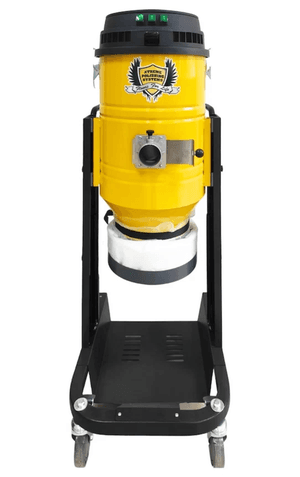
Dual motor extractors are the workhorse choice for contractors running a 9 or 10 inch grinder daily. They deliver enough CFM for consistent dust control on commercial jobs without stepping up to industrial three-phase equipment.
Three-phase extractors are built for production crews running large grinders for eight hours a day, often on polished concrete jobs. These usually come with automatic filter cleaning, larger dust bins, and higher CFM ceilings to match bigger grinder heads.
Match the extractor to how often you'll actually use it. A three-phase machine sitting idle most of the year is money that could have gone toward tooling or a second grinder.
Filter Cleaning and Maintenance That Keeps Suction Strong
Even the best HEPA dust extractor loses suction if the filter isn't maintained. Most machines use one of these cleaning methods:
- Manual tap or shake handle, common on single motor units
- Automatic shaker system, which knocks dust off the filter on a timer
- Reverse pulse cleaning, common on higher end three-phase machines, which blasts compressed air backward through the filter
Whatever system your extractor uses, empty the dust bin before it's full, not after. A full bin restricts airflow and forces dust further into the filter media, shortening its life. Check gaskets and seals regularly too, since a small leak at the lid or hose connection will quietly kill suction without any obvious warning sign.
In Iowa's colder months, condensation inside the extractor housing can also cause dust to cake instead of shaking loose. Storing the machine somewhere it can dry out between jobs helps filters last longer.
What to Do Next
Sizing a HEPA dust extractor comes down to matching CFM to your grinder, choosing a true HEPA-rated filter, and not letting a cheap hose undo the rest of the setup. Get those three things right and dust control on a concrete grinding job stops being a fight.
If you want to see the difference between a shop vac and a properly sized extractor in person, stop by our location in Clive. We stock HEPA dust extractors and concrete grinders sized for everything from a one-car garage to a commercial polishing crew, with contractor pricing and same-day pickup. We ship nationwide too, so distance from Des Moines isn't a problem.
We also run a hands-on 3-day epoxy class every two weeks that covers surface prep, including proper dust extraction, before you ever pick up a roller. If you've got questions about sizing an extractor for your specific grinder, contact our team and we'll walk through the numbers with you.
Shop epoxy supplies with local pickup in Clive
Frequently Asked Questions
How many CFM do I need for a 9-inch grinder?
Most single head grinders with a 9 or 10 inch head need somewhere between 150 and 250 CFM to keep the shroud sealed and dust contained. Check your specific grinder's spec sheet, since shroud design changes the exact number.
Is a HEPA filter required by OSHA for concrete grinding?
OSHA's silica rule for construction points to using tools with integrated water delivery or dust extraction systems that meet certain performance requirements. A true HEPA-rated extractor sized correctly for the grinder is a common way contractors meet that standard. Check the current OSHA silica standard and manufacturer guidance for your specific equipment and job type.
Can I use a regular shop vac instead of a HEPA extractor?
A standard shop vac isn't built to filter fine silica dust and the motor isn't rated for the abrasive load concrete grinding produces. It may run for a short time, but suction drops fast, filters clog, and fine dust escapes into the air. For any regular concrete grinding work, a purpose-built HEPA dust extractor is the right tool.
Need product or a quote?
Our team answers the phone Monday through Saturday.