A straight-talk buying guide to the epoxy flooring supplies Des Moines contractors actually need, from grinders to topcoats, plus where to get them same day.
If you pour and coat floors for a living around Des Moines, you already know the job goes bad fast when you grab the wrong grinder, the wrong epoxy, or skip the moisture test. Finding the right epoxy flooring supplies Des Moines contractors can count on shouldn't mean driving all over the metro or waiting a week on a truck. This guide walks through what you need, in the order you'll use it, and why we stock it in Clive.
We wrote this for the crews working garages in West Des Moines, warehouse floors in Ankeny, and shop floors in Urbandale, plus anyone ordering from farther out in the Midwest. Everything below ships nationwide too, so location is not a limit.
Why Local Supply Matters on a Job Schedule
Epoxy jobs run on tight windows. Once you grind a slab, you want to coat it before dust and moisture creep back in. If a topcoat runs short mid-pour, you cannot just wait until Monday. That is the whole reason same-day pickup in Clive exists. You call ahead, we pull the order, you're back on the slab in under an hour instead of losing a day to a warehouse three states away.
A solid supply list for a Des Moines epoxy contractor covers four things: surface prep equipment, primer and base coats, topcoats, and the small stuff (notched squeegees, spiked rollers, mixing paddles) that fails a job when it's missing.
Start With Concrete Prep: Grinders and Diamond Tooling
Epoxy fails more often from bad prep than bad product. A slab that looks clean can still have laitance, sealers, or old coatings that keep epoxy from bonding.
Here is what a typical prep kit looks like:
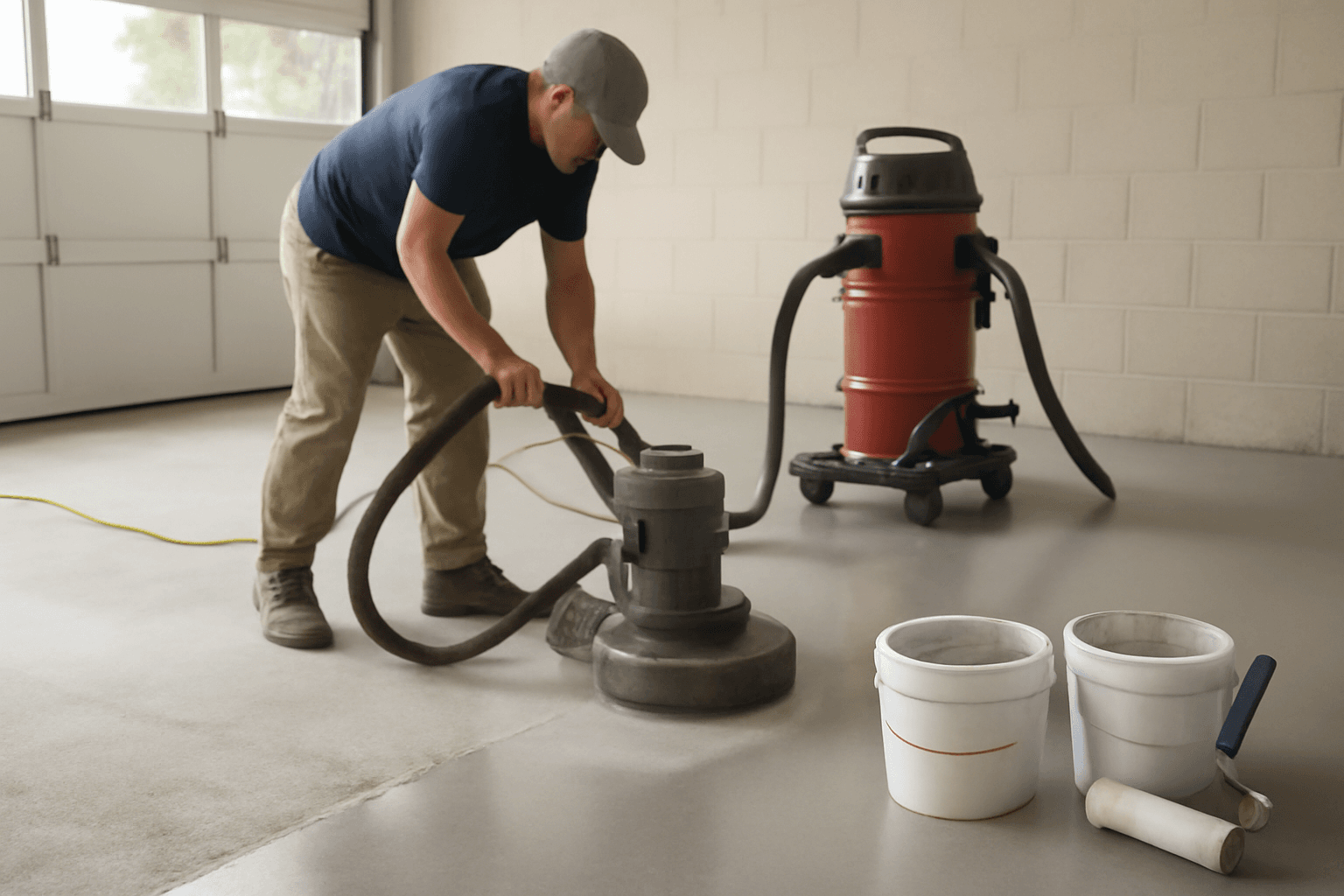
- A planetary or single-head concrete grinder sized to the job. Smaller units work fine for a two-car garage. Bigger propane or electric walk-behinds make sense for warehouse floors over 2,000 square feet.
- Diamond cup wheels in a range of grits. Start coarse (16 to 30 grit metal bond) to strip coatings and open the pores, then step up if you need a smoother profile.
- A concrete densifier for slabs that stay chalky or dusty after grinding. Densifiers harden the surface and cut down on future dusting, which matters on polished or lightly coated floors.
Contractors who buy their diamond tooling from us usually pick up two or three grits at once, because swapping wheels mid-job beats stopping to reorder.
Controlling Dust: HEPA Dust Extractors
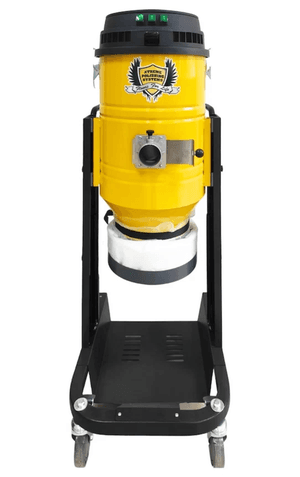
Grinding concrete without dust control is a mess and it's not allowed on most commercial job sites anymore. A HEPA dust extractor hooked to your grinder pulls dust at the source instead of letting it settle on every surface in the building.
Manufacturer specs on true HEPA filters call for capturing 99.97% of particles at 0.3 microns. That is the standard OSHA references for silica dust control on grinding work. If your extractor is not rated to that spec, it is not doing the job, no matter what the box says.
A few things to check before you buy:
- CFM rating matched to your grinder's dust shroud
- Filter type (HEPA, not just a shop-vac filter bag)
- Tank size, since bigger jobs mean more empties if the tank is small
We keep extractors in stock that pair directly with the grinders we sell, so you are not guessing at compatibility.
Choosing the Right Epoxy Coating System
Once the slab is ground, densified if needed, and vacuumed clean, you are ready for coating. This is where most first-time buyers get overwhelmed, so here is the short version.
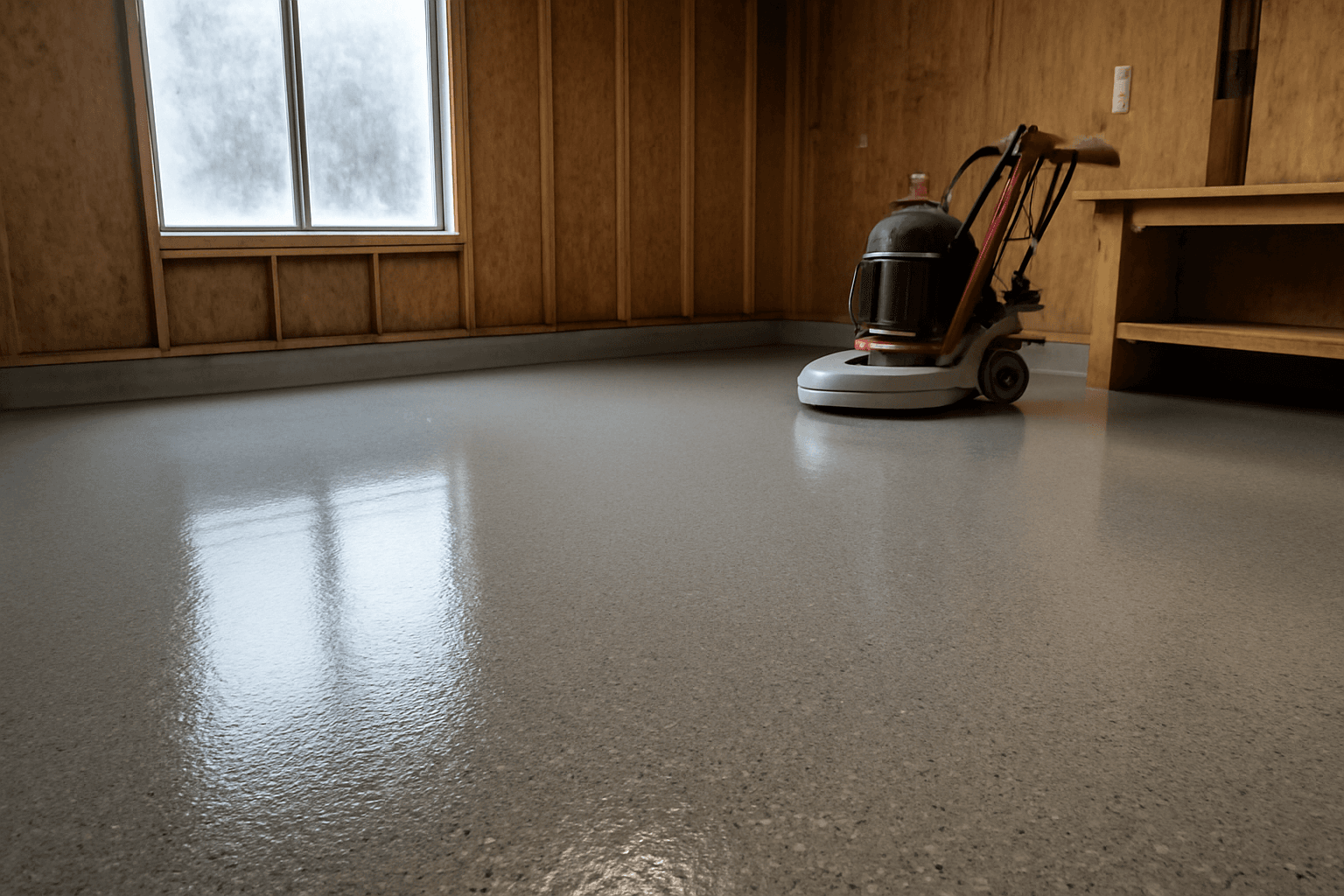
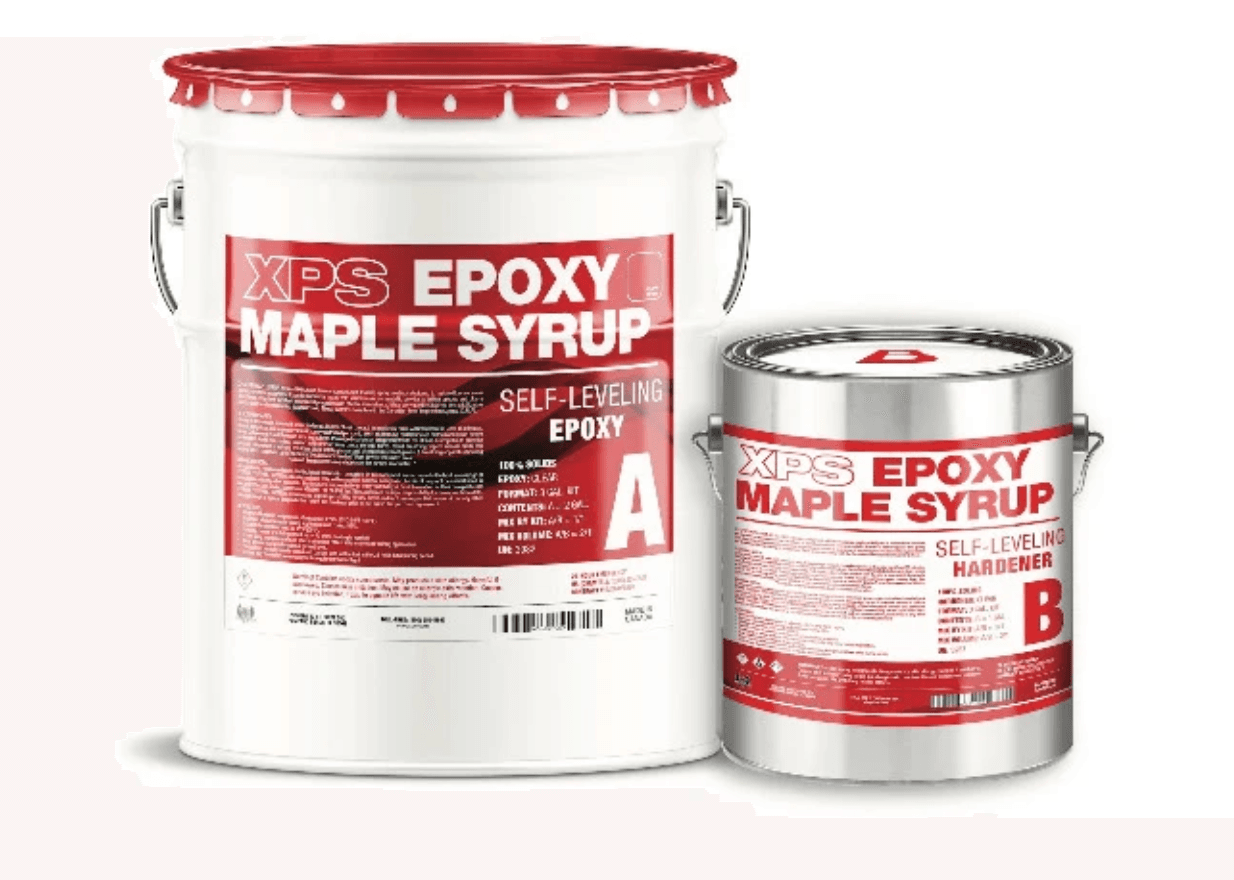
100% solids epoxy gives you the thickest build and best chemical resistance. It cures fast, often within a few hours, which matters when a shop or garage cannot sit empty for days. This is the standard choice for garage floors, shop floors, and light industrial spaces.
Water-based epoxy goes down thinner and has a longer working time. It suits DIY jobs and cosmetic coats where heavy chemical resistance is not the main concern.
If you want color and texture, metallic epoxy and epoxy flake floor systems both start with the same base coat, then add pigment or flake broadcast before the topcoat locks it in. Metallic epoxy gives a marbled, three-dimensional look. Flake systems hide minor surface flaws and give better slip resistance, which makes them a common pick for commercial entryways and shop floors that see foot traffic in wet boots.
For a full breakdown of what goes into a complete system from prep to topcoat, our garage floor epoxy kit guide covers the layer-by-layer build.
Polyaspartic Topcoats for Fast Turnaround
A polyaspartic topcoat is the layer that takes the daily abuse: tire marks, chemical spills, UV exposure near garage doors. Polyaspartic cures much faster than standard epoxy, often letting foot traffic back on the floor the same day and vehicle traffic within a day or two, depending on temperature.
That speed matters for hot tire pickup, which is the wrinkling or lifting that happens when a warm tire sits on a coating that has not fully cured or was applied too thin. A quality polyaspartic topcoat, applied at the manufacturer's recommended mil thickness, resists this far better than a thin single-coat epoxy job.
Contractors working residential garages in Clive and West Des Moines lean on polyaspartic topcoats specifically because homeowners want their garage back fast. Commercial jobs benefit too, since less downtime means less lost revenue for the building owner.
Handling Moisture and Joint Issues
Two problems cause more callbacks than anything else: moisture and joints.
Concrete slabs, especially older ones or those poured without a proper vapor barrier, can push moisture up through the slab over time. That moisture gets trapped under epoxy and causes bubbling, delamination, or full epoxy floor peeling. Before coating any slab you are unsure of, run a moisture test. If the reading comes back high, a moisture vapor barrier primer goes down first to block vapor transmission before the epoxy system goes on.
Joints and cracks need attention too. A polyurea joint filler fills expansion joints and control joints so the epoxy has a solid, flush surface to bond to instead of a gap that will telegraph through the coating later. Skipping this step is one of the most common reasons a finished floor looks fine for six months and then cracks along the joint lines.
Buying Local vs Ordering Online
Ordering epoxy and tooling online works fine when you plan two weeks ahead. It falls apart when a topcoat runs short on a Thursday and the job is due Monday.
Buying from a local supplier in Clive means:
- Same-day pickup on in-stock coatings, primers, and tooling
- Staff who have actually applied the products, not just sold them
- Contractor pricing for repeat buyers instead of one-off retail markups
- Access to the full XPS catalog, so if Clive does not have it on the shelf, the network usually does
We also ship nationwide for contractors outside the Des Moines metro who still want the same product lines and the same technical support by phone.
What to Do Next
If you are bidding a floor this month, walk through your list before you quote it: grinder and diamond wheels rated for the job, a HEPA extractor that matches your grinder, the right epoxy base coat for the traffic level, a polyaspartic topcoat, and a moisture test kit if the slab history is unknown.
If you are new to epoxy work or want to tighten up your technique before the spring rush, our 3-day hands-on class next door in Clive covers surface prep, mixing ratios, and topcoat application on real slabs. Check the training courses page for the next open date.
Ready to build your supply list? Shop epoxy supplies with local pickup in Clive or call ahead and we will have your order staged for pickup. Have questions about a specific job? Reach out through our contact page and we will walk through it with you.
FAQ
What epoxy flooring supplies do I need for a basic garage job?
At minimum you need a grinder with diamond cup wheels, a HEPA extractor, a 100% solids epoxy base coat, a polyaspartic topcoat, mixing paddles, notched squeegees, and spiked rollers for the final coat. A moisture test kit is worth having even on newer slabs.
How do I know if I need a moisture vapor barrier?
Run a calcium chloride or relative humidity moisture test before coating any slab you are not certain about, especially older concrete or slabs without a vapor barrier underneath. High readings mean you need a moisture-blocking primer before the epoxy system goes down.
Can I get epoxy flooring supplies shipped outside of Des Moines?
Yes. While we stock local pickup in Clive for Des Moines, West Des Moines, Ankeny, and Urbandale contractors, we ship the full product line nationwide for anyone ordering from outside Iowa or the Midwest.
Need product or a quote?
Our team answers the phone Monday through Saturday.