Iowa shop owners race the first freeze to coat concrete floors. Here is the temperature window, prep steps, and system picks that make it stick.
If you own a shop, garage, or shed anywhere from Clive to Ankeny, you already know the clock is ticking. Once the ground freezes, your window for a solid epoxy floor coating before winter closes fast. Every fall we get the same calls: guys who waited too long last year and ended up with a floor that never cured right, or peeled by spring.
This post covers why timing matters more than most people think, what cold concrete actually does to a coating job, and how to plan the work so it holds up through an Iowa winter and beyond.
Why Timing Matters for Epoxy Floor Coating Before Winter
Epoxy and polyaspartic coatings are chemical reactions, not paint. They need a certain slab temperature and air temperature to cross-link properly. When that reaction happens too slow, or not at all, you get a soft, tacky, or peeling floor.
In central Iowa, slab temperatures start dropping below the safe zone in late October or early November, even before the air feels that cold. Concrete holds cold longer than it holds heat, so a 55 degree day can still mean a 45 degree slab if the ground underneath has already chilled.
Most shop owners we talk to want the floor done before the first hard freeze, not because it looks nicer, but because a coated floor is easier to keep clean through salt and slush season. Bare concrete soaks up de-icer chemicals and oil all winter. A sealed floor sheds that mess with a mop.
What Cold Concrete Does to a Coating Job
Cold slabs cause three common problems.
First, slow cure times. Epoxy that normally sets up in 8 hours can take 24 or more when the slab sits below 50 degrees. That delay leaves dust and debris more time to settle into the wet film.
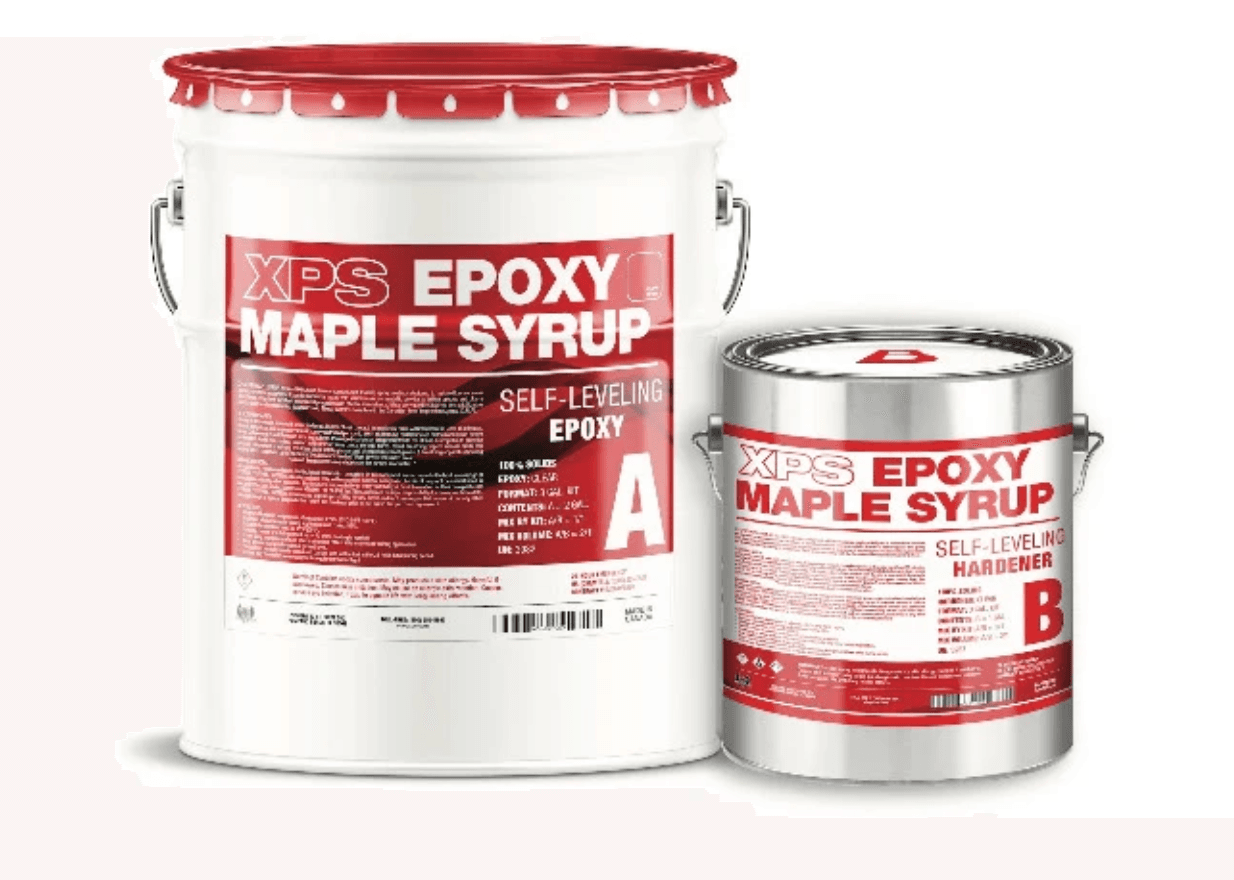
Second, poor adhesion. Epoxy needs to bond into the surface profile of the concrete. Cold coating gets thick and syrupy, so it does not wet out the pores the way it should. That is one of the top causes of epoxy floor peeling within the first year.
Third, moisture problems. Cold slabs condense moisture on the surface, especially overnight. Coating over even a light film of moisture traps vapor underneath, which shows up later as bubbles or a milky haze.
None of this means winter application is impossible. It means you need the right product for the temperature you actually have, not the one you wish you had.
The Ideal Temperature Window for Epoxy and Polyaspartic Systems
Standard epoxy floor coating systems want a slab and air temperature between 55 and 90 degrees, with humidity under 85 percent. That window is realistic in Iowa through most of September and into October, but it narrows fast after that.
Polyaspartic topcoats give you more room. Many can be applied down to 35 degrees Fahrenheit and cure in a couple of hours instead of a full day. That is why a lot of Des Moines area contractors switch to a polyaspartic topcoat system for late-season jobs instead of pushing a standard epoxy past its comfort zone.
If you are not sure which system fits your timeline, bring your job details into the shop or call ahead. We can talk through slab age, current temperature, and what you are parking on the floor before you buy anything.
Prepping the Slab Before the First Freeze
Good prep matters even more when you are racing the calendar. Skipping steps to save a day almost always costs more time later.
Start with a moisture test. A slab on grade in Iowa can carry more vapor than it looks like it should, especially if it was poured within the last two years. If your test comes back high, plan on a moisture vapor barrier primer rather than skipping straight to color coat.
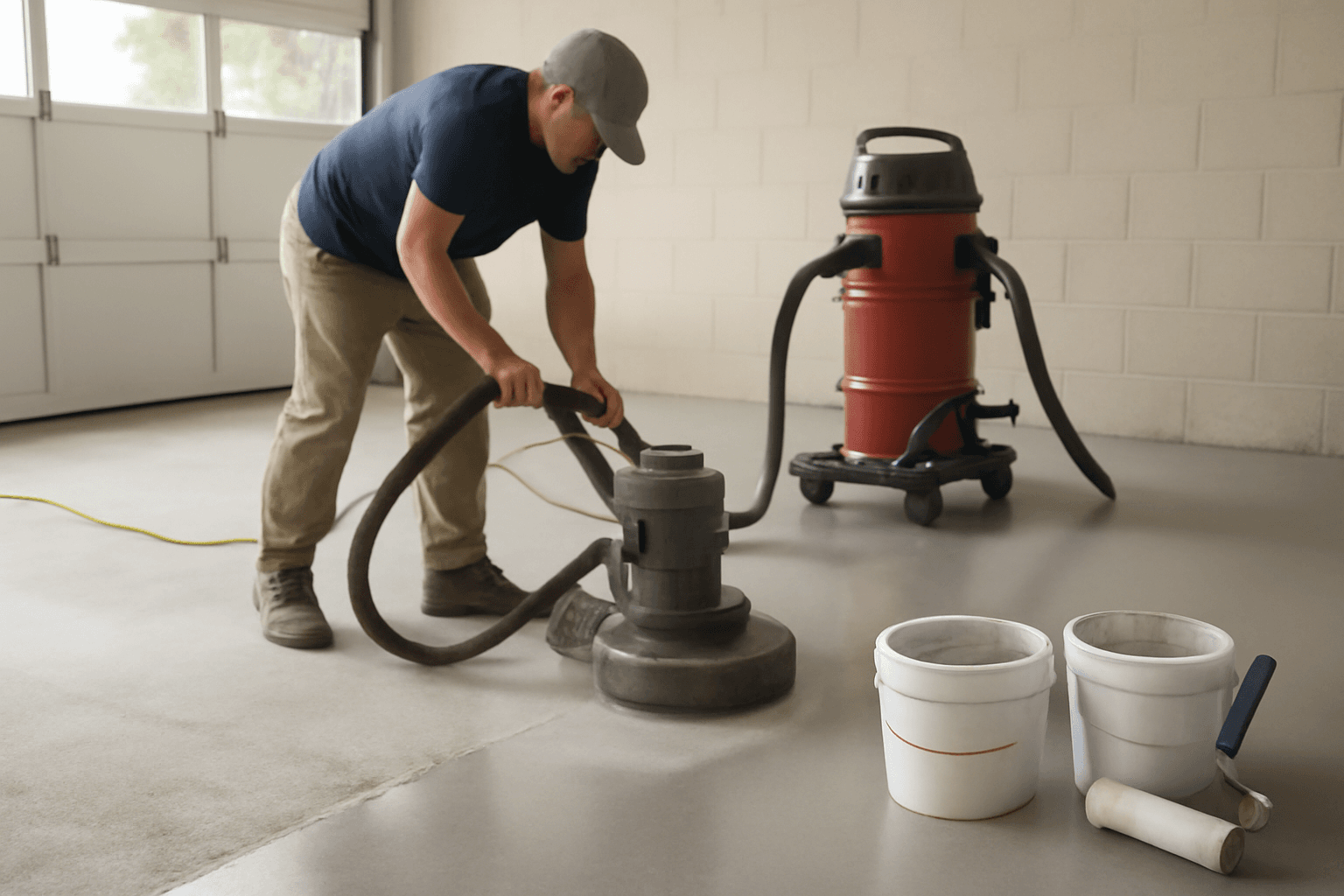
Next, grind the surface. A mechanical grind with a diamond cup wheel opens the pores of the concrete and knocks down old sealer, paint, or laitance. This is the step most DIY floors skip, and it is the number one reason coatings fail early. Acid etching alone will not give you the same profile.
If the slab is soft or dusty after grinding, a concrete densifier hardens the surface and cuts down on future dusting. It is a cheap step that pays off on older shop floors.
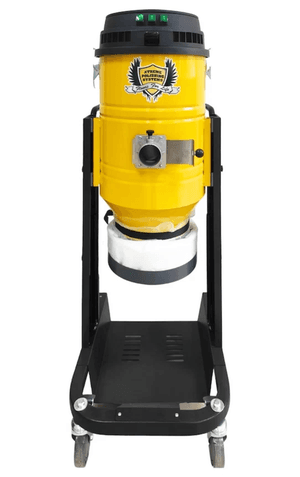
Run a HEPA dust extractor with your grinder the whole time. Cold weather means closed doors, and shop dust builds up fast in a sealed space. Keeping the air clean also keeps debris out of your wet coating.
Picking the Right System for Iowa Winters
Once the slab is ground, primed if needed, and dry, the system you choose should match how the space gets used in winter.
If you park vehicles inside and deal with hot tire pickup from tires warmed by highway driving, look for a coating rated for that specifically. Standard epoxy can soften and lift under hot rubber. A polyaspartic or polyurea topcoat resists it much better and is the standard pick for daily-driver garages in West Des Moines and Urbandale where cars go straight from the interstate into the garage.
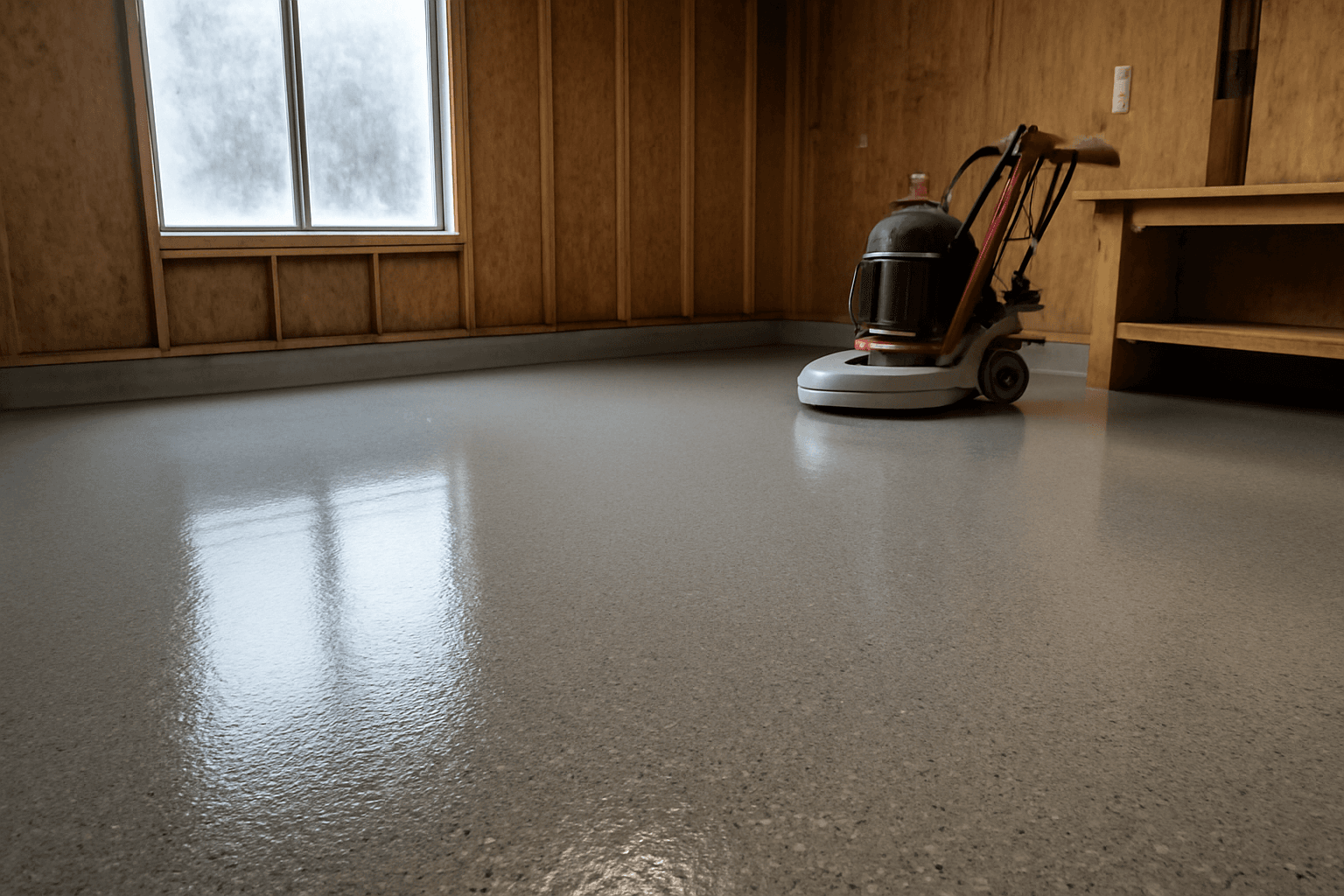
If the floor sees salt and slush tracked in all winter, a broadcast flake system adds texture for grip and hides the white salt residue between cleanings. An epoxy flake floor also holds up well to chains, boots, and shop carts.
For a shop that doubles as a showroom or a garage you actually want to look good, a metallic epoxy finish gives you depth and color movement that flake systems cannot match. It costs more in labor time but it is a one-shot upgrade that lasts for years.
Do not forget the joints. Control joints and cracks move with temperature swings all winter. A flexible polyurea joint filler keeps debris and moisture out of those gaps instead of letting them widen every freeze-thaw cycle.
A Simple Timeline for a Weekend Shop Floor
Here is roughly how a two-day residential or small shop job breaks down before the freeze hits.
- Day one, morning: moisture test and grind with a diamond cup wheel and dust extractor.
- Day one, afternoon: repair cracks, fill joints, apply moisture vapor barrier if needed.
- Day one, evening: base coat epoxy, broadcast flake if using it.
- Day two, morning: scrape and vacuum loose flake.
- Day two, afternoon: apply polyaspartic topcoat.
- Day two, evening: light foot traffic only, no vehicles yet.
Most polyaspartic topcoats let you walk on the floor within a few hours and drive on it within 24 to 72 hours, depending on the product and temperature. Always check the technical data sheet for the specific coating you buy, since cure times shift with cold weather even for cold-tolerant systems.
Bigger commercial floors in Ankeny or Des Moines proper obviously take longer, but the order of operations stays the same. Prep, prime if needed, base coat, broadcast, topcoat.
What to Do Next
If you have been putting off the floor because you were not sure what to buy or how much time you had left, the fix is simpler than it feels. Get a moisture reading, check your slab temperature for the next week, and pick a system that matches the window you actually have, not the one you had in August.
We stock the grinders, dust extractors, primers, and topcoats for this exact job, and everything ships same day from Clive or is ready for local pickup. If you would rather learn the process hands-on before you tackle your own floor, our 3-day epoxy class next door walks through grinding, priming, and topcoating on a real slab.
Shop epoxy supplies with local pickup in Clive before the ground freezes, or check the schedule for our next training course if you want to run the job yourself with backup from people who do this daily. We ship nationwide too, so if you are outside the Midwest and reading this before your own first freeze, the same rules still apply.
FAQ
How cold is too cold to epoxy a garage floor?
Standard epoxy needs the slab and air above roughly 55 degrees to cure correctly. Below that, cure time stretches out and adhesion suffers. Polyaspartic topcoats can go down to about 35 degrees, which is why they are common for late fall jobs in Iowa.
Can you apply epoxy floor coating before winter in an unheated shop?
Yes, if you monitor slab temperature, not just air temperature. An unheated shop can still work if you use a portable heater to bring the slab up during application and keep it there through the early cure window. Polyaspartic systems give you more margin for error here than standard epoxy.
How long does epoxy need to cure before parking a vehicle on it?
Most full cure times run from 3 to 7 days for standard epoxy and as little as 24 to 72 hours for polyaspartic topcoats, depending on temperature and the specific product. Always check the data sheet, since cold weather slows every system down even when it is rated for lower temperatures.
Need product or a quote?
Our team answers the phone Monday through Saturday.